


Avondale will consider a water-firming agreement Monday that would give the city another way to replace 758 acre-feet expected to be cut from its annual Central Arizona Project delivery in 2027 and 2028.
The city holds a municipal-and-industrial CAP subcontract for 5,416 acre-feet a year. A 14% reduction would lower that delivery to 4,658 acre-feet, according to the City Council staff report. The annual difference is about 247 million gallons.
The agreement would not add water to Avondale immediately, and the scheduled reduction does not mean household service will be cut by 14%. It would create a second recovery route if the city needs stored water to offset part of its reduced Colorado River supply.
Resolution 1069-1026 appears on the consent agenda for the Oct. 19 City Council meeting. It remains proposed until the council acts. The meeting begins at 5:30 p.m. at Avondale City Hall, 11465 W. Civic Center Drive.
How the backup would work
Arizona has stored unused Colorado River water underground for decades, earning long-term storage credits that can be used during shortages. The Arizona Water Banking Authority manages credits used to firm, or make up, eligible reductions for CAP municipal subcontractors.
Avondale staff expects its near-term firming to use “independent recovery.” Under that method, the water bank transfers credits into the city’s account. The credits are sometimes described as paper water because the transaction moves a legal right to recover stored water rather than sending a new volume through the CAP canal at that moment.
The proposed agreement also allows “direct recovery.” That method would pump water associated with storage credits from CAP recovery wells and physically deliver it to Avondale. City staff said direct recovery is not currently anticipated until fiscal 2029, although the fiscal 2027 budget has room if conditions require it sooner.
That distinction makes the agreement a contingency measure. Staff expects one firming method to cover the scheduled reduction, but wants the direct-delivery option available if river conditions or recovery needs change.
Federal rules drive the 2027 reduction
The U.S. Department of the Interior approved new operating rules Aug. 21 for Lake Powell and Lake Mead. The decision requires a 1.25 million-acre-foot reduction in Lower Basin deliveries in both 2027 and 2028. Under the states’ proposed sharing arrangement, Arizona’s portion is 760,000 acre-feet a year.
The Arizona Water Banking Authority’s preliminary 2027 operating plan says 14% of the CAP municipal-and-industrial pool could be affected. Avondale’s staff report applies that percentage to the city’s subcontract and identifies the resulting 758-acre-foot annual shortfall as eligible for firming.
The federal decision also calls for the Lower Basin states to conserve and store at least 700,000 additional acre-feet over two years. Lake Powell’s final water-year 2027 release volume will be determined in April, leaving another operational milestone before next summer’s peak demand.
Part of a broader Avondale water strategy
The proposed agreement follows the council’s Oct. 5 adoption of a $303.5 million water and sewer roadmap. That plan projects average daily water demand rising from 12.8 million gallons in 2025 to 23.7 million gallons at buildout and identifies new wells, pumping, storage and treatment connections.
The master plan describes a supply portfolio that includes Salt River Project water, CAP water, groundwater, reclaimed water and stored credits. It concluded that Avondale has adequate supplies for projected growth under its planning assumptions, while separately modeling Colorado River reductions and dry-year responses.
Other West Valley cities are also preparing for the 2027 rules. Glendale, for example, has outlined how stored credits and planned wells fit into its Colorado River response. Avondale’s Oct. 19 vote will determine whether the direct-recovery option becomes part of its own shortage toolkit.
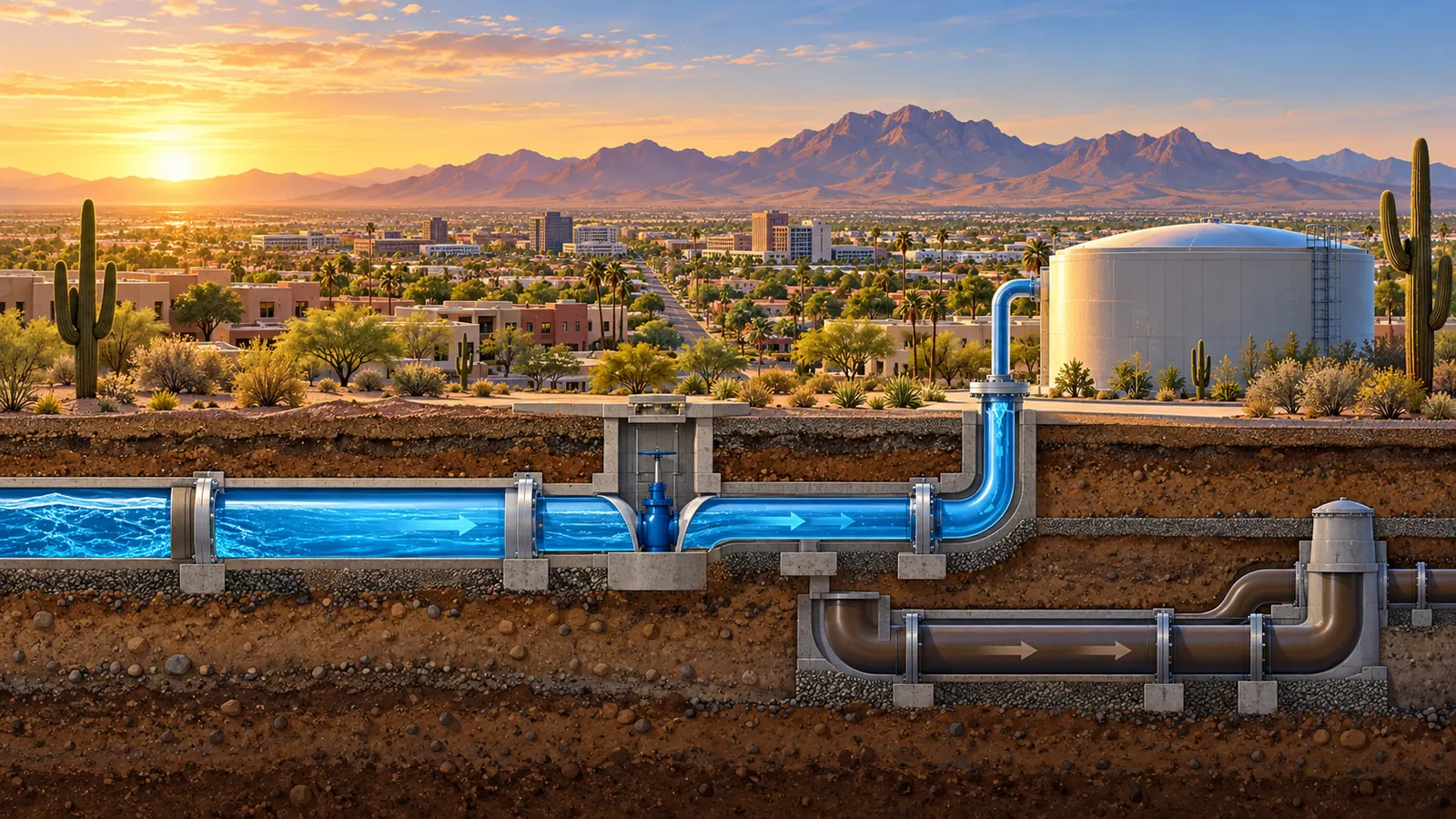
Featured image: AI-generated editorial illustration representing municipal water and wastewater planning. It does not depict a specific Avondale facility, project design or engineering plan.


Comments
Join the conversation. Keep comments relevant, civil and focused on the story.