


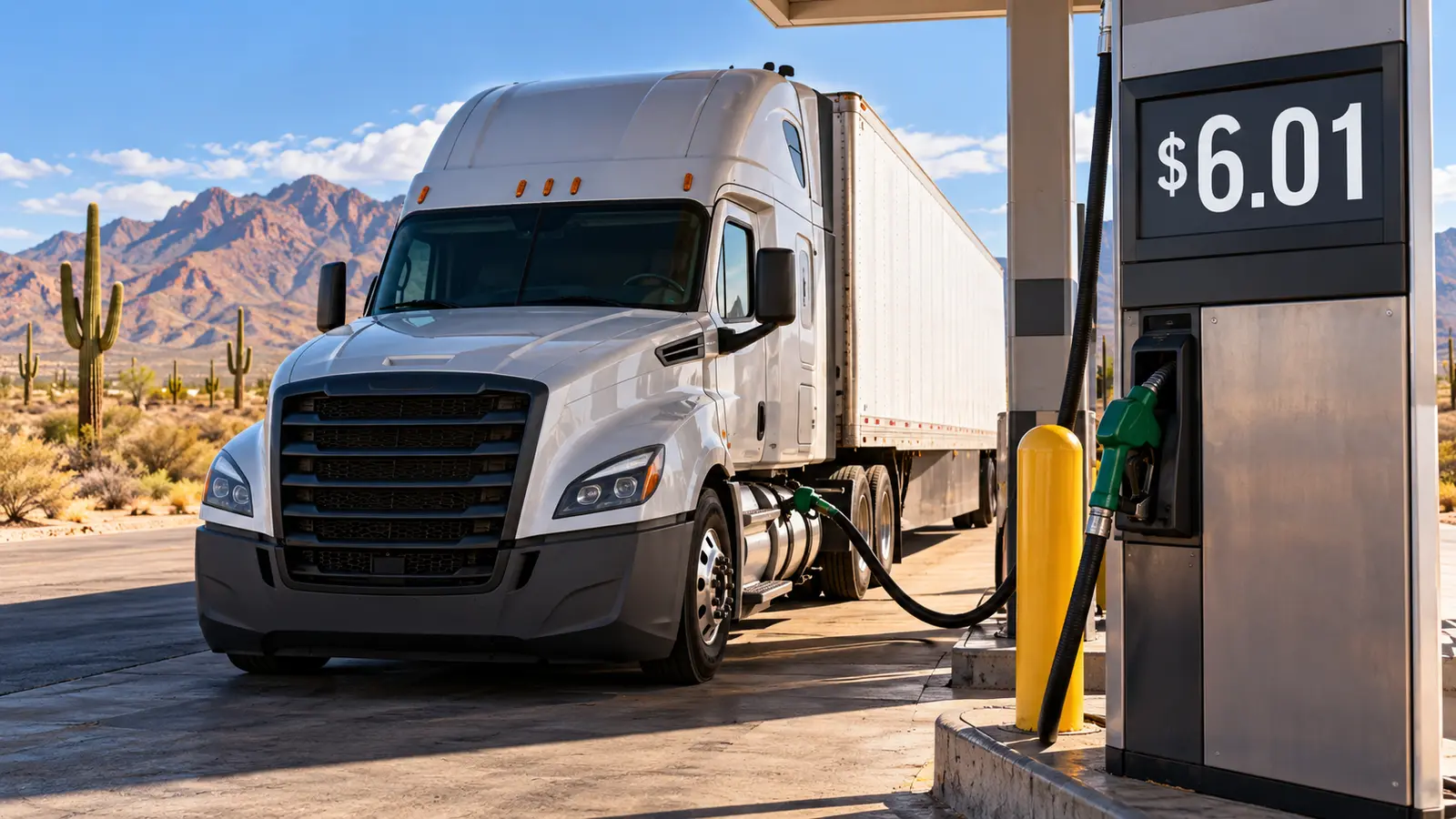
Arizona’s average diesel price climbed to $6.0147 per gallon on Sunday, Sept. 13, setting a record in AAA’s daily fuel-price data and adding a new cost pressure for West Valley trucking, construction and delivery businesses.
The statewide figure is especially relevant across the Loop 303 and Interstate 10 corridors, where warehouses, industrial projects, construction sites and growing residential areas depend heavily on diesel-powered trucks and equipment. The immediate price increase also reaches residents who drive diesel pickups or recreational vehicles.
AAA listed the national diesel average at $6.2040 per gallon Sunday, also a record. The national figure was $6.1602 Saturday, $5.8970 one week earlier, $5.4043 one month earlier and $3.6981 one year earlier.
At Arizona’s statewide average, a 30-gallon purchase would cost about $180.44. Actual prices vary by station, location and payment method.
Why diesel is rising
Reuters reported that the national average first crossed $6 last week as crude oil prices rose above $100 per barrel and global fuel supplies tightened. The report cited disruptions connected to the conflict involving the United States, Israel and Iran, Ukrainian attacks on Russian refineries, Russia’s fuel-export restrictions and limits on Chinese exports.
U.S. diesel inventories were 13% below their five-year average at 106.3 million barrels, according to Energy Information Administration data cited by Reuters. Refiners were operating at high utilization, but analysts said seasonal maintenance and tight global supplies could keep diesel markets volatile.
Diesel prices matter beyond what appears on station signs. The fuel powers much of the freight network that moves food, building materials, retail inventory and packages. It is also widely used by contractors, farms, municipal fleets and emergency-service vehicles.
Higher fuel costs do not translate into an identical or immediate increase in every retail price. Their effect depends on fuel contracts, delivery distances, inventory schedules and whether companies absorb the cost or pass it along. Businesses that operate their own trucks or heavy equipment can feel the increase sooner.
What it means in the West Valley
The West Valley’s exposure is unusually visible because transportation and construction are central to the region’s growth. Distribution centers along Interstate 10 and Loop 303 receive and dispatch truck traffic daily, while road projects, housing construction and major industrial developments use diesel-powered equipment.
Small trucking companies and independent operators may have fuel-surcharge agreements that recover part of the increase. Contractors bidding fixed-price work have less flexibility when fuel costs rise after a contract is signed. Local governments and school districts may also face higher operating costs, though the timing depends on their purchasing arrangements.
For consumers, the most useful near-term indicators are the daily AAA fuel averages and the U.S. Energy Information Administration’s weekly gasoline and diesel update. The statewide average is a benchmark rather than a quote for a specific West Valley station, and prices can change throughout the day.
AAA’s Sept. 13 reading establishes the clearest new fact: Arizona diesel has reached a record average above $6 per gallon. How long that level lasts will depend largely on crude prices, refinery operations and the availability of diesel in domestic and global markets.


Comments
Join the conversation. Keep comments relevant, civil and focused on the story.