


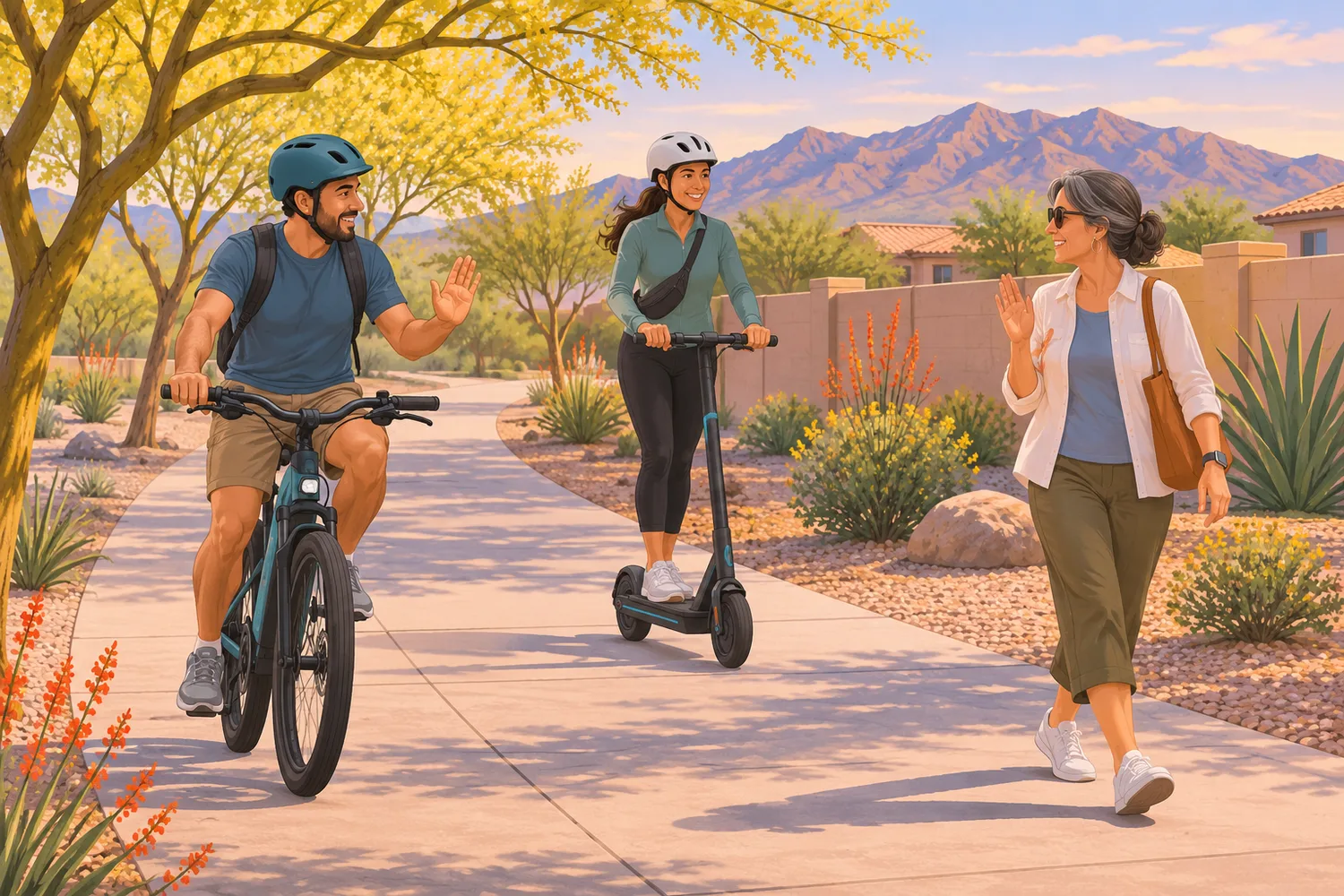
Surprise’s new rules for electric bicycles, electric scooters and similar small electric devices take effect Dec. 17, setting enforceable speed limits and pedestrian protections for riders across the city.
The Surprise City Council approved Ordinance 2026-19 by a 7-0 vote on Nov. 17. The city’s Police Department outreach page now lists Dec. 17 as the effective date.
The measure applies to electric bicycles, electric miniature scooters, electric stand-up scooters and other motorized devices designed mainly to carry one person when Arizona law does not classify them as motor vehicles or motor-driven cycles. The city’s materials also identify one-wheels and motorized skateboards, although some rules differ by device.
Sidewalk speed drops to 5 mph near pedestrians
Riders may travel no faster than 15 mph on sidewalks. When approaching or passing a pedestrian, they must slow to 5 mph, yield the right of way and give an audible warning before passing.
The ordinance also requires riders to travel at a speed that is reasonable for conditions. A rider entering or crossing a roadway from a sidewalk must slow enough to yield safely. On a roadway, riders generally may not move so slowly that they block the normal flow of traffic, unless the slower speed is necessary for safety or required by law.
Passengers are prohibited on devices designed for one person, and riders may not use a handheld electronic device while operating one. At night, the device must have a white front lamp visible from at least 500 feet and a red rear reflector.
City parks, trails and parking structures
The new law prohibits the covered devices in city parking structures. They are also prohibited in city parks and on city trails unless posted signs specifically allow them. Where riding is allowed, users must follow the posted conditions.
Motorized skateboards may not be operated on public roadways. Their use on sidewalks and pedestrian walkways is also prohibited unless state law permits it.
The ordinance does not establish a citywide minimum rider age or a general helmet requirement. Families should still check manufacturer guidance and any applicable state rules for the type and class of device being used.
Most violations are civil, but serious conduct is criminal
Most violations are civil offenses. Reckless operation, operating while impaired and operating with alcohol in the body while under age 21 are criminal offenses under the ordinance.
Reckless operation means conduct showing disregard for the safety of people or property. The ordinance lists examples such as wheelies, stunts, intentional swerving, weaving through traffic and entering traffic unsafely when the behavior creates that risk.
Police may impound a device used in a criminal violation or in unlawful operation that causes a collision involving property damage, injury or death. An impounded device must generally be held for at least 72 hours. Release requires identification and proof of ownership, and a parent or guardian must be present when the operator is under 18. A device may be held longer as evidence.
Mobility devices used by people with disabilities remain exempt where federal or state disability law protects their use.
What changes on Dec. 17
The ordinance replaces Surprise’s existing code section for bicycles, electric bicycles and stand-up electric scooters. It also removes references to an expired shared e-bike and scooter rental pilot program adopted in 2019.
City staff said the rules followed outreach at district and school meetings from August through late October. The staff presentation identified sidewalk safety, reckless riding, locations needing special attention and rider education as recurring concerns. The measure has no anticipated budget or staffing impact.
Residents can review the city’s electric bike and scooter information page and the official meeting records portal for the Nov. 17 council packet and Ordinance 2026-19.



Comments
Join the conversation. Keep comments relevant, civil and focused on the story.