


Taiwan Semiconductor Manufacturing Co. said Tuesday that it intends to begin using ASML’s High NA extreme ultraviolet lithography technology in high-volume production of advanced chips in 2030, setting a new milestone on the company’s long-term manufacturing roadmap.
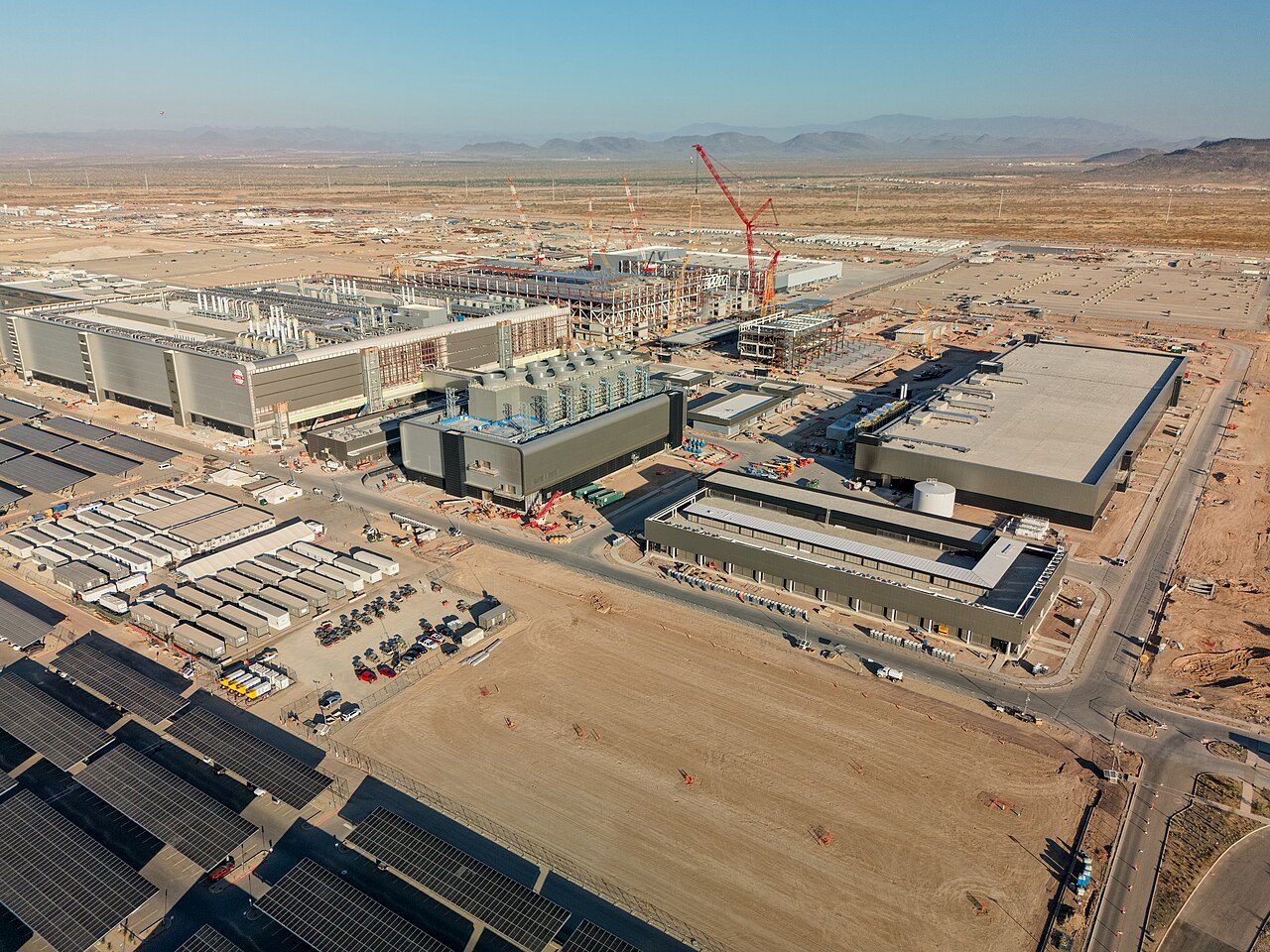
The Sept. 8 announcement matters in metro Phoenix because TSMC is building an expanding advanced-manufacturing campus in north Phoenix, near Interstate 17 and Loop 303. However, the company did not identify which factories will receive the equipment, and it did not specifically commit the technology to an Arizona fab.
That distinction is important. The announcement establishes a companywide technology target. It does not change the opening dates or assigned process technologies that TSMC has published for its Phoenix facilities.
What High NA EUV does
Lithography systems use light to transfer extremely small circuit patterns onto silicon wafers. ASML’s current extreme ultraviolet systems use optics with a numerical aperture of 0.33. High NA systems increase that figure to 0.55, allowing manufacturers to print finer features for future generations of advanced chips.
TSMC and ASML also announced an industry initiative to develop larger, 12-inch photomasks for High NA equipment. The companies said the larger masks could improve factory productivity, lower manufacturing costs and reduce the need to stitch together patterns when producing very large chips, including processors used for artificial intelligence.
According to the joint TSMC-ASML announcement, the initiative aims to establish a pilot line for the larger masks by 2031 and prepare 12-inch High NA lithography systems for advanced-node production by 2033. TSMC’s planned 2030 adoption of High NA will begin with today’s smaller six-inch mask format.
Reuters reported that Intel is already using High NA equipment for some production, while TSMC and Samsung have not yet introduced it for high-volume manufacturing.
How the target fits the Arizona buildout
TSMC’s current Arizona roadmap says its first Phoenix fab has produced N4 chips since late 2024. The second fab is targeted to begin N3 production in the second half of 2027. The third fab, now under construction, is planned for N2 and A16 technologies with production targeted by the end of the decade.
Initial work also has begun on a fourth fab and the first advanced-packaging facility. TSMC says the broader Arizona plan includes six logic fabs, two advanced-packaging facilities and a research and development center on a campus spanning more than 1,100 acres.
A separate July announcement from the Arizona Commerce Authority said TSMC plans four additional Arizona fabs for 2-nanometer or more advanced production, bringing the announced statewide investment to $265 billion. The state said roughly 30% of TSMC’s 2-nanometer and more advanced capacity is expected to be in Arizona after the announced fabs are complete.
Those plans make Arizona a plausible future location for High NA equipment, especially as the campus moves toward smaller process nodes. Still, TSMC has not said that the 2030 High NA production target will be met in Phoenix. Equipment assignments, specific fab locations and any local construction or utility effects remain unresolved.
What to watch next
The next locally meaningful development would be a TSMC statement tying High NA tools to a particular Arizona fab or production line. Tool installation is a major factory milestone because these systems require specialized cleanroom space, utilities, calibration and supplier support.
West Valley Post will track any Arizona-specific equipment commitment alongside construction, production and supplier milestones in the TSMC and West Valley Semiconductor Supplier Tracker.
Image note: The featured photograph shows TSMC Fab 21 under construction in Phoenix in November 2023. It is archival and does not depict High NA equipment or current construction. Photo by Hunter Trick via Wikimedia Commons, licensed under CC BY-SA 4.0.