


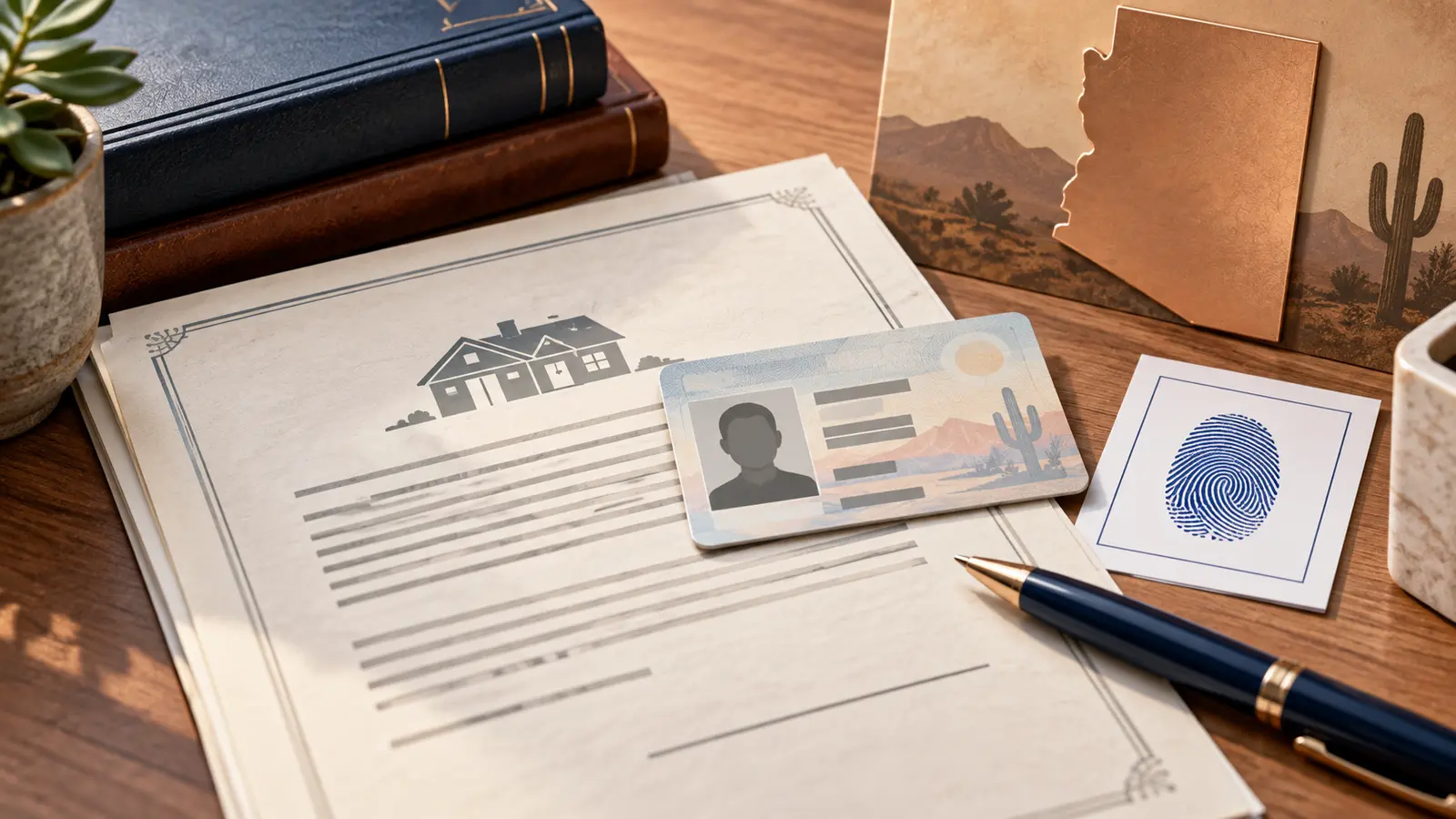
Maricopa County residents who personally submit documents for recording now need to bring photo identification.
The Maricopa County Recorder’s Office says that, as of Sunday, Sept. 13, all documents delivered for recording in person or through a recording kiosk require presentation of photo ID. The requirement comes from Arizona’s newly effective Senate Bill 1479, Chapter 31, a package of safeguards aimed at property and deed fraud.
The practical impact will be greatest for people who record their own deeds, affidavits, powers of attorney or other instruments rather than having a title company, escrow office or attorney handle the filing.
What the recorder may keep
Under A.R.S. § 11-472, recorder staff may note the type of identification presented, the name on the ID and its identification number. The law prohibits the Recorder’s Office from copying or retaining the identification itself.
The recorded ID information is confidential and is not available for public inspection under Arizona public-records law.
The photo-ID requirement applies to documents submitted at a recorder’s office or public recording kiosk. The law exempts submissions made by or on behalf of licensed escrow officers and offices, title insurers and title agents, state- or federally chartered banks and credit unions, active members of the State Bar of Arizona, and government entities. Documents sent by mail or through authorized electronic-recording systems are outside the in-person requirement.
Other safeguards in the same law
SB 1479 also changes how certain real-estate and power-of-attorney documents are notarized. For a deed, quitclaim deed, deed of trust, other document affecting real property or a power of attorney, the signer generally must place a thumbprint or available fingerprint in the notary’s journal. The fingerprint is kept in the journal rather than printed on the document recorded with the county.
The law lists exceptions for certain foreclosure-related trustee’s deeds, deeds of release and reconveyance, and qualifying remote notarizations that retain an audiovisual record.
Another provision requires Arizona county assessors to offer a voluntary notification system by Jan. 1, 2027. Enrolled property owners are to receive an email, text message or similar alert when the assessor is notified of an ownership change or a change to the owner’s mailing address.
The legislation also raises the criminal classification for knowingly recording a forged, groundless or materially false real-property document to a class 5 felony.
What to know before filing
People planning to record a document themselves should check the Recorder’s Office website for locations, hours, fees and document-format requirements before visiting. Because the office’s notice is dated Sept. 13, the requirement will be in place when county recording counters next open.
The Recorder’s Office records and preserves documents but does not determine whether a proposed deed or other instrument is legally appropriate. People with questions about ownership, estate planning or how to prepare a document may need guidance from a title professional or attorney.



Comments
Join the conversation. Keep comments relevant, civil and focused on the story.