


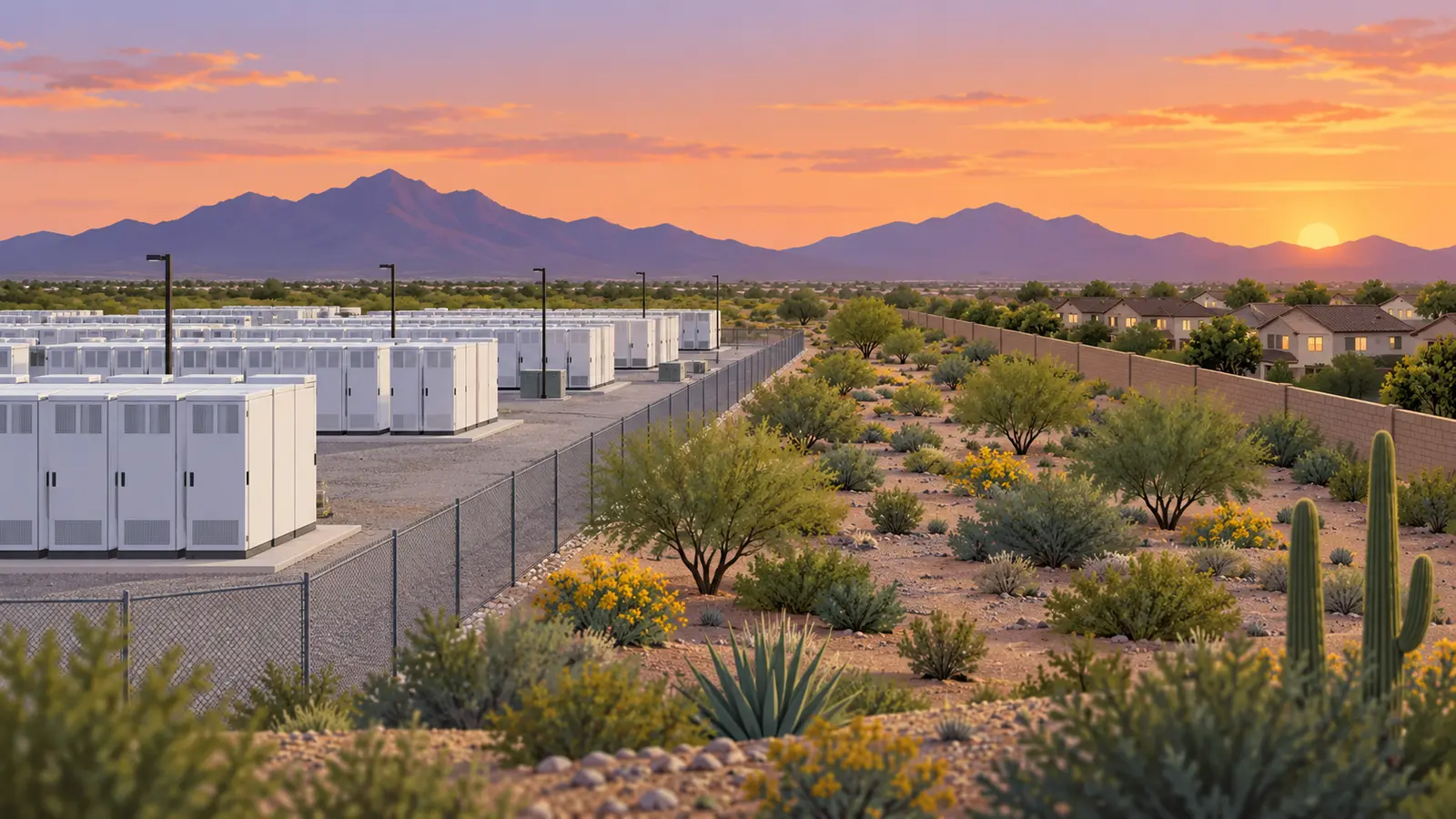
Surprise has adopted citywide zoning rules for battery energy storage systems, giving the City Council discretion to set a residential separation of 100 to 500 feet when it considers an individual project.
The council approved the measure unanimously Sept. 1. The city’s official meeting record identifies it as Ordinance 2026-10 and zoning text amendment FS23-1041.
The decision creates a regulatory path for future large battery projects in Surprise. It does not approve a specific facility, site or operator. Any future proposal would still need to identify its location, capacity and design and complete the applicable city review.
Setback will be decided with each proposal
The adopted approach replaces a single citywide residential separation figure with a variable range. ABC15 reported that the council may require a battery storage project to be located 100 to 500 feet from nearby homes based on the circumstances of the proposal.
That means the minimum distance for a future project will not be known from the ordinance alone. Residents and developers will need to examine the conditions imposed during the project-specific zoning process.
The Sept. 1 council file contains the staff report, proposed ordinance and several alternative setback versions considered during the legislative process. The Planning and Zoning Commission had recommended a 100-foot residential separation at its Aug. 6 meeting before the council selected the broader variable range.
The distinction could matter as utilities and developers seek sites for systems that store electricity when supply is available and release it later to support demand and grid reliability. It could also affect battery installations associated with the West Valley’s growing industrial and data-center load.
Surprise has firsthand history with battery safety
Battery siting carries unusual local significance because Surprise was the location of the April 2019 failure at Arizona Public Service’s McMicken energy storage facility. Smoke was reported from the building, and the site experienced a catastrophic failure about three hours later, injuring first responders.
APS’s investigation summary says the event involved cascading thermal runaway and the buildup of flammable gases. The utility’s final technical report recommended changes to system design, ventilation, gas monitoring, fire protection and emergency response practices.
Modern battery projects are reviewed under updated safety standards, but zoning rules address separate land-use questions such as where facilities may be placed, how they relate to nearby homes and what site-specific conditions should apply.
Industry raised concerns during the drafting process
The Arizona Solar Energy Industries Association submitted comments in May supporting a regulatory pathway while asking Surprise to narrow the ordinance’s scope and avoid what it viewed as excessive cumulative separation requirements. The group also sought an objective noise standard and more flexibility for design changes after initial approval.
Those comments preceded the council’s final action and represent the industry group’s position, not city findings. The adopted council documents control how Surprise will process future applications.
The next practical milestone will be the first project proposed under the new rules. That application should show how the council uses the 100-to-500-foot range and what fire-safety, noise, screening and emergency-response conditions are required at a specific site.
West Valley Post will maintain the policy’s status and future project milestones in the Surprise Development Tracker.
Featured image: AI-generated editorial illustration of a generic battery storage site and residential buffer. It does not depict an actual Surprise project, site or approved plan.


Comments
Join the conversation. Keep comments relevant, civil and focused on the story.