


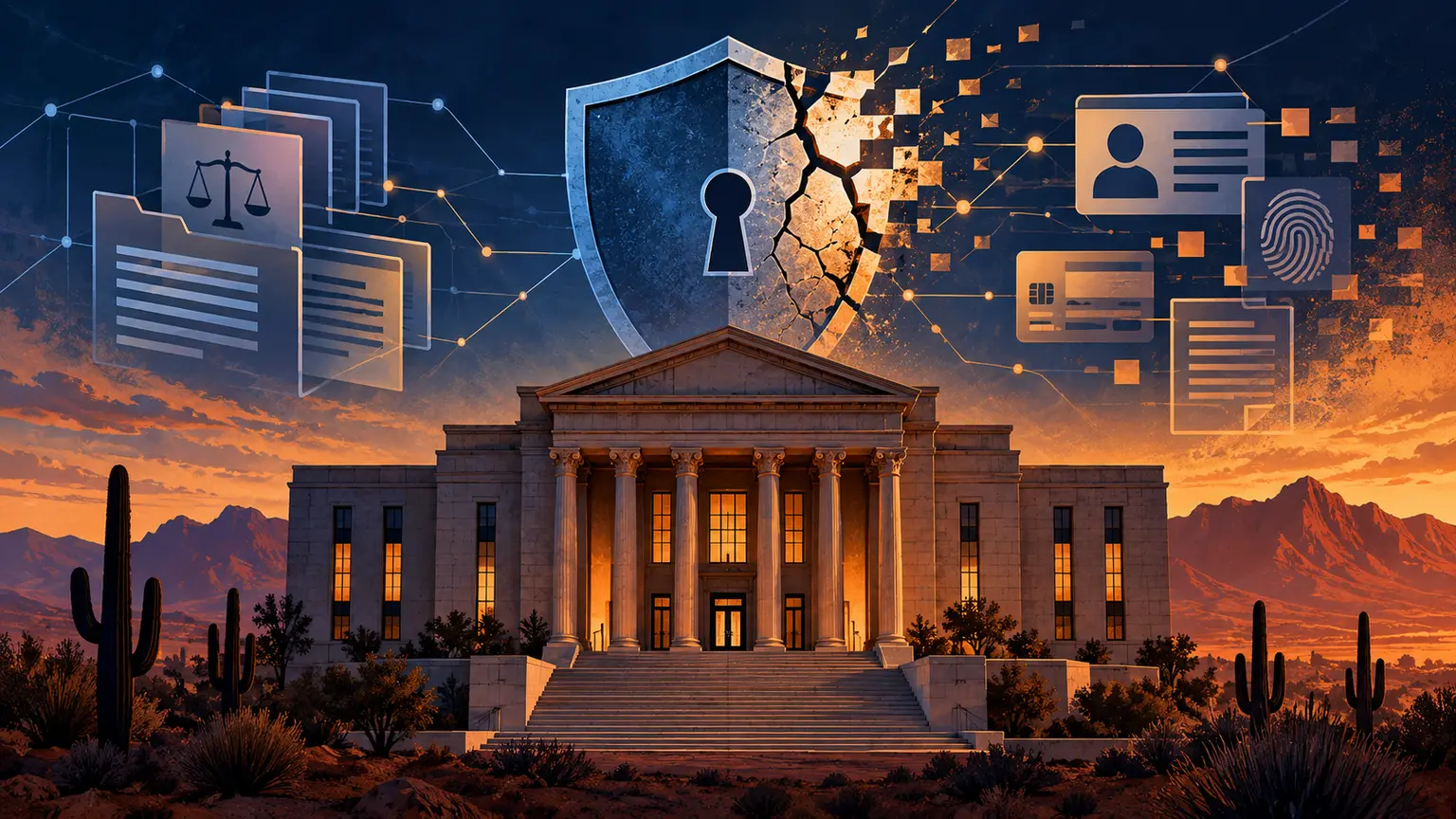
Arizona’s court system says hackers copied backup files containing names, case numbers and Social Security numbers connected to approximately 1.3 million people referred to the statewide Fines/Fees and Restitution Enforcement program.
The Arizona Judicial Branch has opened an official cybersecurity alert and exposure-check page. The FARE program covers outstanding court debt from civil traffic, criminal traffic and criminal violations, and the affected records span about 30 years. People with older court debt may be included even if they have no current case.
The court says it has no evidence that the copied data has been shared, accessed or can easily be read. It also says no court records were deleted or altered. The exposure is still significant because the files included Social Security numbers.
What the court says was copied
The attack began around 11:30 a.m. Thursday, Sept. 24, 2026, after a court employee clicked a malicious link. Court IT staff identified and stopped the activity in less than two hours, according to the judiciary’s alert page. The FBI and state law-enforcement agencies are involved.
Beyond the FARE records, the copied backups included information about active and inactive protective orders and more than 150,000 Foster Care Review Board recommendation reports dating to 2010.
The foster-care reports can include case information, names of children and interested parties, statements, findings and recommendations. The court says those reports do not contain addresses or phone numbers. Approximately 8,000 children are currently in foster care, although the copied reports cover both current and past cases.
Based on what investigators know so far, the copied files did not include information about jurors, witnesses or court employees. Court dates, orders and pending proceedings remain valid and are not delayed by the incident.
How to check and protect your information
People who have been referred to FARE can start at the Judicial Branch’s official cybersecurity alert page and use the “Verify Here” option. Going directly through azcourts.gov is safer than following an unsolicited link.
The court says FARE participants will be contacted by text message and that mailed collection notices will carry an alert. People connected to protective orders may receive an email from the official court address listed on the alert page.
The judiciary recommends placing a credit hold or security freeze with Equifax, Experian and TransUnion. The Federal Trade Commission says a freeze is free and can block new credit accounts from being opened until the consumer lifts it. Anyone who sees suspicious activity can use the FTC’s IdentityTheft.gov recovery tools and the Arizona Attorney General’s data-breach resources.
Residents should be wary of messages that demand payment or ask for personal information while claiming to verify exposure. The court’s official page says its alert is real, but it does not advise people to pay a fee to check their status or freeze credit.
Investigation continues
The Judicial Branch is still identifying affected records and notifying people. The official alert page is the best source for updates because the number of records and available assistance may change as the investigation continues.



Comments
Join the conversation. Keep comments relevant, civil and focused on the story.